
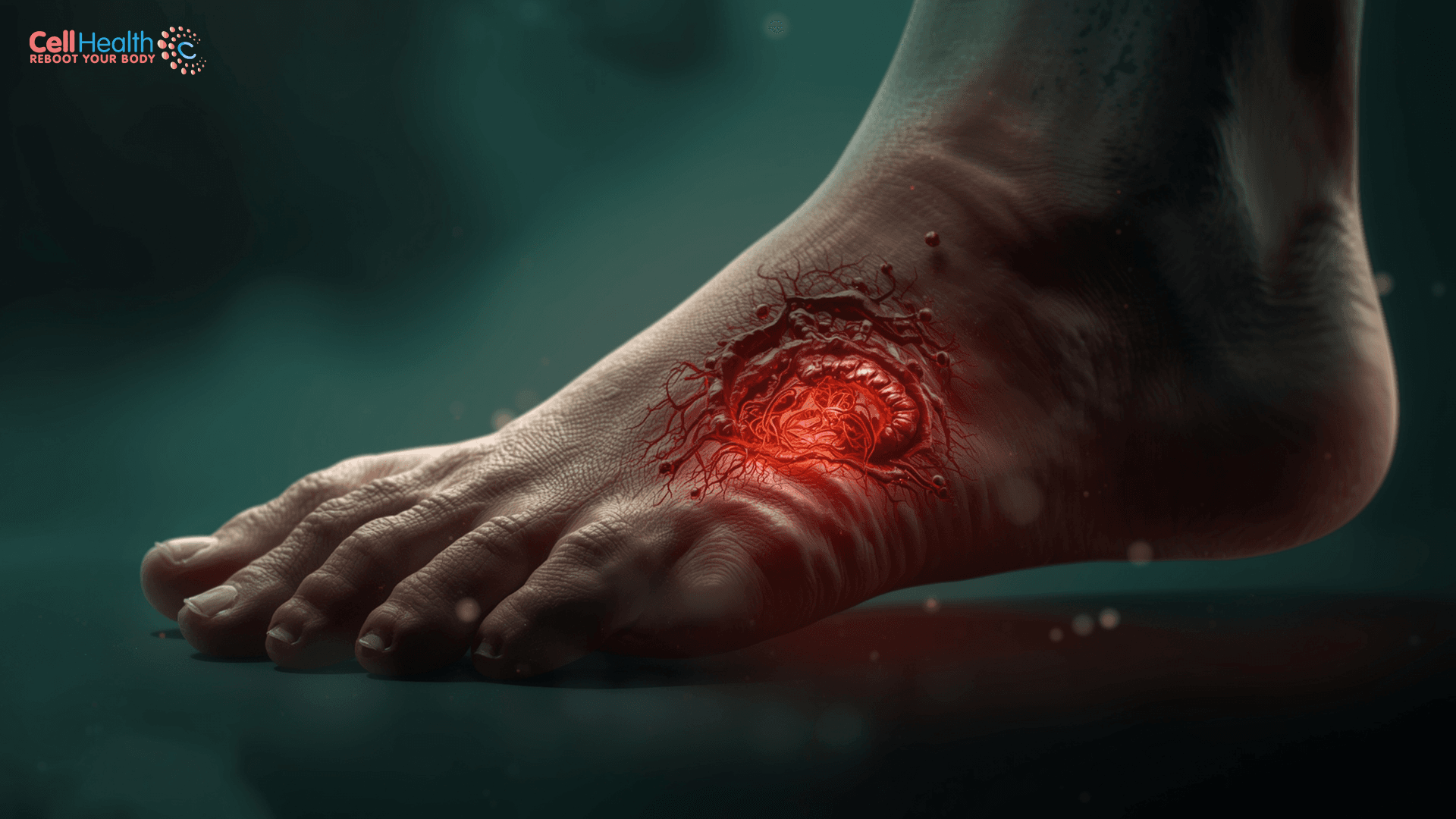
At a Glance: What Is Gangrene?
Gangrene is the death of body tissue caused by poor blood supply, injury, or infection. It most often affects fingers and toes but can also involve muscles and internal organs. It’s a medical emergency, early treatment saves tissue and lives.
Common warning signs
• Skin color changes: red, bronze, green, purple, or black
• Swelling, blisters, or oozing fluid with a foul odor
• Severe pain or, sometimes, loss of sensation
• Crackling under the skin (in gas gangrene), due to trapped gas
CellHealth note: If you notice these signs, seek urgent care immediately. Do not wait for symptoms to “settle.”
What Causes Gangrene?
Gangrene develops when tissues don’t get enough blood and oxygen, or when a severe infection destroys tissue.
Major causes & risk factors
• Diabetes and peripheral artery disease (PAD)
• Severe injuries, crush wounds, or contaminated cuts
• Smoking or tobacco use (damages blood vessels)
• Frostbite, tight casts/bandages, or prolonged pressure
• Low immunity, recent surgery, or delayed wound care
Types of Gangrene (Know the Differences)
• Dry gangrene (ischemic): Blood flow is cut off. Skin becomes dry, shriveled, and dark. Common in toes and fingers with PAD.
• Wet gangrene (infected): Dead tissue plus infection, spreads quickly; needs urgent treatment.
• Gas gangrene (clostridial myonecrosis): A rapidly progressing muscle infection that produces gas in tissues; it can be life-threatening within hours.
• Fournier’s gangrene: A severe infection of the genital/perineal region requiring emergency care.
Symptoms to Watch For (Don’t Ignore These)
• Color changes (red → bronze/brown → green/purple/black)
• Swelling, warmth or coolness, tenderness or numbness
• Blisters/sores that ooze foul-smelling fluid
• Severe, sudden pain (or surprising numbness if nerves are damaged)
• Crackling sensation when pressed (gas under the skin)
• Fever, fast heart rate, chills, or feeling very unwell
Call emergency care now if you see fast-spreading discoloration, severe pain, foul odor, or crackling in a wound.
How Doctors Diagnose Gangrene
• Clinical exam of skin, sensation, pulses, and pain pattern
• Blood tests to check infection/inflammation
• Imaging (X-ray/ultrasound/CT/MRI) to detect gas, bone, or deep tissue involvement
• Wound cultures or tissue samples to identify bacteria and guide antibiotics
Treatment: What to Expect at CellHealth
Gangrene care is urgent and multidisciplinary. At CellHealth, we focus on rapid stabilization and long-term prevention.
Our coordinated approach
1. Immediate assessment & stabilization
o Pain control, IV fluids if needed, urgent monitoring.
2. Infection control
o Broad-spectrum antibiotics are promptly administered, then tailored based on cultures.
3. Surgical care
o Debridement (removal of dead tissue) to stop the spread; in advanced cases, additional procedures may be necessary.
4. Restore blood flow
o Vascular evaluation; when indicated, referral for revascularization to improve circulation.
5. Advanced therapies (when appropriate)
o Hyperbaric oxygen therapy or specialized wound care protocols may be considered based on clinical need.
6. Diabetes & lifestyle management
o Blood sugar optimization, smoking cessation support, protective footwear, and daily foot checks.
7. Education & follow-up
o Clear home-care instructions, signs to watch, and scheduled reviews to prevent recurrence.
A CellHealth Case Insight (From Our Video)
In our recent video, Mr. Rajsekhar presented with signs consistent with gangrene. Mr. Ravi Kumar explained the step-by-step measures used to slow disease progression, prompt infection control, careful wound care, and timely escalation to the appropriate specialists. This case underscores a simple truth: acting early makes a meaningful difference.
(Patient details shared for educational purposes with respect for privacy. Individual care plans vary.)
Prevention: Small Habits, Big Protection
• Check feet and hands daily, especially if you have diabetes or PAD
• Manage blood sugar, blood pressure, and cholesterol
• Quit smoking; even cutting down improves circulation
• Treat cuts immediately: clean, cover, and monitor
• Wear well-fitting shoes; avoid tight bandages or prolonged pressure
• Keep warm in cold weather to protect extremities
• Schedule regular reviews if you have circulation problems or prior wounds
When to Visit CellHealth
• You notice new discoloration, foul-smelling discharge, rapid swelling, or intense pain/numbness in a limb or wound
• A diabetic foot ulcer looks worse, not better
• You feel systemically unwell (fever, chills, fast heartbeat) with a skin or soft-tissue problem
Don’t wait. Early evaluation at CellHealth can reduce complications and improve outcomes.
FAQs About Gangrene
1. Is gangrene contagious?
No. The infection itself can spread within your tissues, but gangrene isn’t passed from person to person.
2. Can dry gangrene turn into wet gangrene?
Yes, if infection sets in. That’s why early wound care and monitoring are critical.
3. Will I always need surgery?
Not always, but surgical debridement is common and often life-saving. The exact plan depends on type, location, and severity.
4. Can gangrene be reversed?
Dead tissue cannot be revived, but fast treatment can stop progression, protect healthy tissue, and support healing.
5. What can I do today to reduce risk?
Check your feet, manage blood sugar and circulation, stop smoking, and seek care early for any non-healing wound.
Final Word from CellHealth
Gangrene is serious but treatable, especially when caught early. If you see warning signs, visit CellHealth for expert guidance, rapid stabilization, and a clear, compassionate plan for the future.